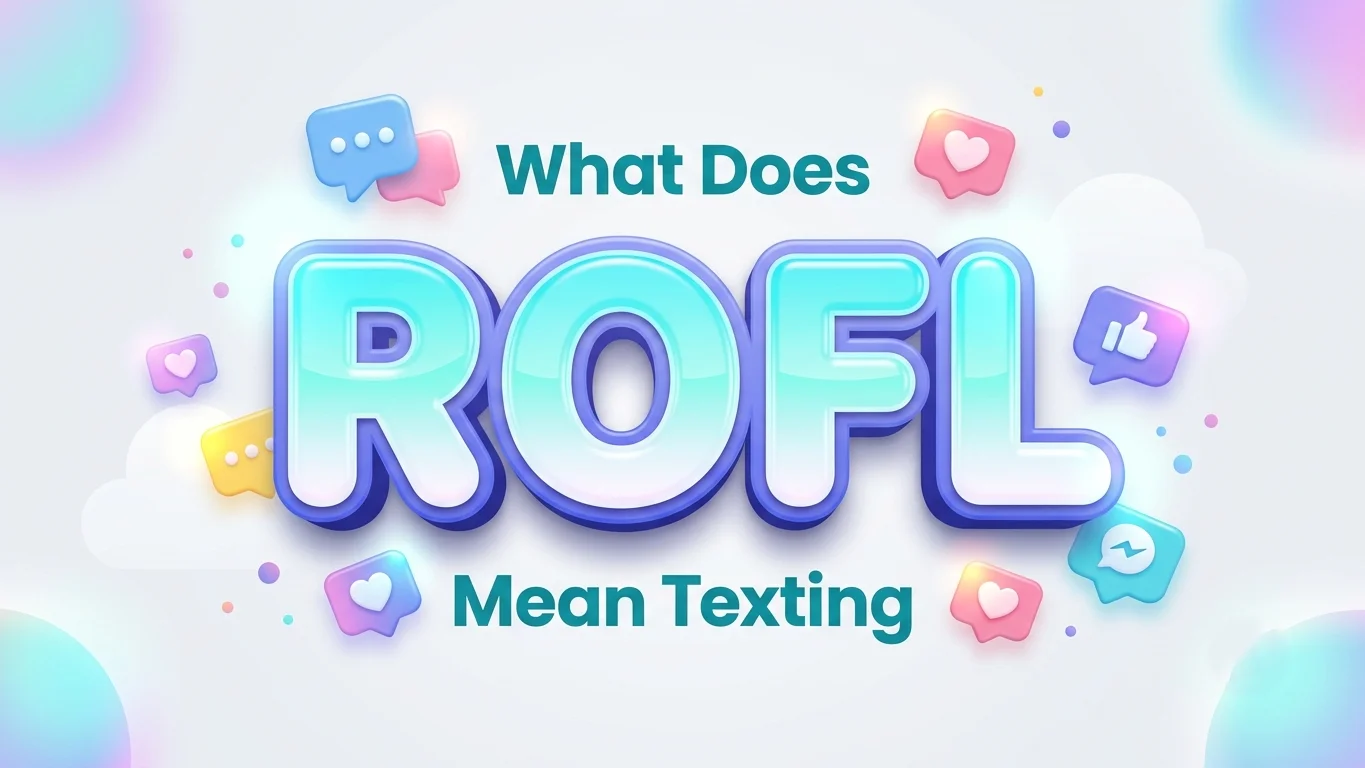

If you’ve spent any time texting, scrolling through social media, or chatting online, you’ve probably come across the term ROFL. It often appears in conversations when something is extremely funny, but many people still wonder: what does ROFL mean, and when should you use it?
The confusion is understandable. Internet slang changes quickly, and some abbreviations can have multiple meanings depending on the context. ROFL is one of those classic online expressions that has survived for decades, yet many younger users encounter it without fully understanding its history or tone.
In this guide, you’ll learn exactly what ROFL means, where it came from, how people use it today, and when it may not be the best choice. You’ll also see real-life examples, cultural differences, common misunderstandings, and practical ways to respond when someone sends it to you.
What Does ROFL Mean? – Quick Meaning
ROFL stands for:
“Rolling On the Floor Laughing.”
It is used to show that something is extremely funny.
People typically use ROFL when regular laughter expressions like “haha” or “LOL” don’t feel strong enough.
Simple Definition
ROFL means:
- You’re laughing very hard.
- Something is extremely amusing.
- You want to exaggerate your reaction to a joke or funny situation.
Examples
“That video was so funny, ROFL!”
“ROFL, I can’t believe you actually said that.”
“Your autocorrect mistake has me ROFL.”
In most cases, the phrase doesn’t mean someone is literally rolling on the floor. It’s simply a humorous way to express intense laughter.
Origin & Background
ROFL emerged during the early days of internet communication in the 1990s.
Before smartphones and emojis became common, internet users relied heavily on abbreviations to communicate emotions quickly. Chat rooms, online forums, and instant messaging platforms encouraged shorter messages because typing speed and internet connections were often limited.
As online culture grew, expressions like:
- LOL (Laughing Out Loud)
- BRB (Be Right Back)
- IMO (In My Opinion)
- ROFL (Rolling On the Floor Laughing)
became part of everyday digital language.
Cultural Influence
ROFL gained popularity through:
- Early internet forums
- Online gaming communities
- MSN Messenger
- AOL Instant Messenger
- Message boards
The phrase spread because it painted a vivid picture. Instead of simply saying “I’m laughing,” it suggested someone was laughing so hard they fell to the floor.
Social Media Impact
As social media evolved, ROFL competed with newer expressions such as:
- LMAO
- LMFAO
- 😂
- 💀
Although younger users may prefer emojis today, ROFL remains recognizable across the internet and still appears in text conversations, gaming chats, and comment sections.
How the Meaning Evolved
Originally, ROFL indicated extreme laughter.
Today, many people use it more casually. Sometimes users type ROFL even when they’re only mildly amused.
Like many internet expressions, its intensity often depends on the person’s communication style.
Real-Life Conversations
WhatsApp Conversation
1st Person: I accidentally joined my boss’s meeting wearing a cat filter.
2nd Person: ROFL! Please tell me someone took a screenshot.
Instagram DM
1st Person: Look at this picture of my dog trying to fit into a shoebox.
2nd Person: ROFL, he looks completely convinced it fits.
TikTok Comments
1st Person: I spent twenty minutes looking for my glasses.
2nd Person: ROFL, were they on your head the whole time?
1st Person: Yes…
2nd Person: ROFL! That’s happened to me too.
Text Message
1st Person: My little brother tried to charge the TV remote.
2nd Person: ROFL. That’s actually genius-level confusion.
These examples show how ROFL is usually used in lighthearted, friendly conversations.
Emotional & Psychological Meaning
At its core, ROFL communicates more than laughter.
It signals:
- Enjoyment
- Social connection
- Shared humor
- Emotional engagement
When someone sends ROFL, they’re often trying to strengthen the conversation by showing genuine amusement.
Why People Use It
People use ROFL because written messages lack facial expressions and tone of voice.
Without visible reactions, readers might not know whether a joke landed successfully. ROFL fills that emotional gap.
What It Reveals About Modern Communication
Digital conversations rely on emotional shortcuts.
Expressions like ROFL help people communicate reactions quickly without writing lengthy explanations.
A simple acronym can instantly tell someone:
“I found that incredibly funny.”
Personal-Style Scenario
Imagine sending a funny childhood photo to a friend you haven’t spoken to in years.
A few seconds later, they reply:
“ROFL, I completely forgot that haircut!”
That response does more than express laughter. It creates a shared moment and strengthens the emotional connection between both people.
Usage in Different Contexts
Social Media
ROFL is commonly used in:
- Instagram comments
- TikTok replies
- Facebook posts
- Gaming chats
- Meme pages
It helps users react quickly to entertaining content.
Friends & Relationships
Among friends, ROFL often signals comfort and familiarity.
Example:
“ROFL, you always find a way to make things awkward.”
The tone is playful rather than critical.
Work & Professional Settings
Using ROFL at work requires caution.
It may be acceptable in casual team chats, but formal emails usually call for more professional language.
Instead of:
“ROFL, that’s hilarious.”
Consider:
“That’s really funny.”
Casual vs Serious Tone
ROFL works best in casual conversations.
Using it during serious discussions may seem insensitive or dismissive.
The context matters just as much as the word itself.
When NOT to Use It
Although ROFL is harmless in many situations, there are moments when it can create misunderstandings.
Serious Conversations
Avoid using ROFL when discussing:
- Illness
- Loss
- Personal struggles
- Workplace conflicts
Professional Communication
Formal business communication rarely benefits from internet slang.
Sensitive Topics
Humor can vary across cultures and personal experiences.
Using ROFL in emotionally charged conversations may make others feel ignored or misunderstood.
When Tone Is Unclear
If you’re unsure whether a joke was intended, responding with ROFL may send the wrong message.
Common Misunderstandings
People Think It Means Literal Laughter
Most users aren’t actually rolling on the floor.
It’s simply an exaggerated expression.
Tone Can Be Misread
Sometimes ROFL appears sarcastic.
Example:
“ROFL, great job.”
Depending on context, that could be genuine praise or subtle criticism.
Different Generations Use It Differently
Older internet users may use ROFL sincerely.
Younger users often prefer emojis or newer slang.
Not Every Laugh Is Equal
Some people use ROFL for mild amusement, while others reserve it for truly hilarious moments.
Comparison Table
| Expression | Meaning | Intensity |
|---|---|---|
| Haha | Basic laughter | Low |
| LOL | Laughing out loud | Moderate |
| ROFL | Rolling on the floor laughing | High |
| LMAO | Laughing very hard | High |
| LMFAO | Extremely strong laughter | Very High |
| 😂 | Crying with laughter | High |
| 😐 | Not amused | Opposite meaning |
Key Insight
ROFL sits between traditional internet slang and modern digital expression. It communicates strong laughter while remaining friendly, recognizable, and easy to understand across different age groups.
Variations & Types of ROFL
1. ROFLMAO
Rolling on the floor laughing my ass off.
2. ROFLLOL
Combines ROFL and LOL for extra emphasis.
3. ROFLCOPTER
A humorous internet meme variation.
4. ROFLMFAO
An exaggerated version showing intense laughter.
5. ROFL 😂
Combines ROFL with a laughing emoji.
6. ROFL 🤣
Adds stronger visual laughter.
7. ROFL OMG
Expresses surprise and laughter together.
8. ROFL Seriously?
Used when something is unbelievably funny.
9. ROFL Stop
Means “you’re making me laugh too much.”
10. ROFL Right Now
Highlights an immediate reaction to humor.
How to Respond When Someone Uses ROFL
Casual Replies
- Glad you liked it.
- I knew you’d laugh.
- That made my day.
Funny Replies
- I’m accepting comedy awards now.
- My mission is complete.
- I’ll be here all week.
Mature Replies
- Happy it gave you a laugh.
- Sometimes we all need that.
- Glad it brightened your day.
Respectful Replies
- Thanks, I appreciate that.
- I’m glad you enjoyed it.
- Happy it made you smile.
Regional & Cultural Usage
Western Culture
ROFL is widely recognized and often associated with classic internet culture.
Many users who grew up with early online forums still use it regularly.
Asian Culture
ROFL is understood in English-speaking online communities, though local slang and emojis are often more common.
Middle Eastern Culture
English-speaking internet users recognize ROFL, particularly on social media and gaming platforms.
However, regional expressions may sometimes replace it.
Global Internet Usage
ROFL remains one of the most universally recognized internet abbreviations.
Even users who rarely use it usually understand its meaning.
Generational Differences
Gen Z
- More likely to use emojis.
- Frequently uses “💀” to indicate extreme laughter.
- May view ROFL as slightly old-school.
Millennials
- Often grew up using ROFL.
- Continue using it in texts and online conversations.
- Recognize its original internet culture roots.
Is It Safe for Kids?
Yes, ROFL is generally safe for kids.
It simply means “Rolling On the Floor Laughing” and contains no offensive meaning. Parents should still encourage children to understand context and use appropriate language depending on the situation.
FAQs
What does ROFL actually mean?
ROFL means “Rolling On the Floor Laughing,” an internet slang expression used to show extremely strong laughter or amusement.
What does ROFL mean from a girl in texting?
From a girl, ROFL usually means she genuinely finds something funny and wants to express strong amusement.
Is rofl a slang?
Yes. ROFL is internet slang commonly used in texting, social media conversations, gaming chats, and online communities.
What does smh mean dirty in texting?
SMH usually means “Shaking My Head.” It is not inherently dirty and generally expresses disappointment or disbelief.
What does LOL 😂 mean in texting?
LOL means “Laughing Out Loud.” Combined with 😂, it emphasizes laughter and strong amusement during conversation.
What does ftw mean in texting?
FTW commonly means “For The Win,” expressing excitement, approval, support, or enthusiasm about something positive.
Conclusion
ROFL is one of the internet’s most enduring expressions. Short for “Rolling On the Floor Laughing,” it communicates strong amusement and helps bring emotion into digital conversations.
Although newer slang and emojis continue to evolve, ROFL remains widely understood across generations and online communities. Whether you’re reacting to a hilarious meme, a funny text message, or an unforgettable story from a friend, ROFL provides a simple way to show genuine laughter.
Understanding when to use it—and when not to—can help you communicate more naturally and confidently online. Like all digital language, its power comes from context, tone, and the connection it creates between people.